If you are looking for prolotherapy treatment in Manchester, we can help

At Balance Health Centre, we offer prolotherapy to patients from Manchester as part of our specialist approach to musculoskeletal care.
Treatment is led by Michael Furlong, a fully qualified osteopath with over 20 years of clinical experience and advanced training in prolotherapy techniques. Every assessment is carried out with care, precision, and a detailed understanding of how the body heals and stabilises injured tissue.
We offer a free consultation for anyone in Manchester who is considering prolotherapy. You can book using the button below, call us directly, or send a WhatsApp message if you would like quick advice.
Below, you will find clear information explaining what prolotherapy involves, its potential benefits, and how to know whether it may be the right option for your symptoms.
Reviews and Testimonials
Below, you can find some reviews and testimonials on our prolotherapy treatments.
EXCELLENTTrustindex verifies that the original source of the review is Google. My brother and nephew have both attended this clinic and highly recommended them. My mum who is 80 has been suffering from pain in her lower back. Shes very independent and it was causing her not just pain but anxiety. I took her along and she was seen by Elliot, we can’t thank him enough he explained her problem in a way we could understand which was very reassuring he treated her back and gave sound advice. We can see a huge improvement in her mobility she’s able to walk further, go shopping and she is happier in herself. I said it’s like she’s been to Lourdes 😂 Thanks again Elliot for helping my lovely mum xxPosted onTrustindex verifies that the original source of the review is Google. I recently had the pleasure of experiencing colonic irrigation therapy with my therapist, Nicola, and I cannot recommend her highly enough! From the moment I arrived, I felt welcomed and at ease. Nicola's professionalism and expertise were evident throughout the session. She took the time to explain the process in detail and answered all my questions with patience and care. During the therapy, she ensured my comfort and provided a relaxing environment, which made the experience much more enjoyable. I left feeling lighter, more energized, and with a newfound sense of well-being. Nicola’s holistic approach and genuine concern for her clients truly set her apart. If you are considering colonic irrigation therapy, I wholeheartedly recommend booking a session with Nicola. You won't regret it! less...Posted onTrustindex verifies that the original source of the review is Google. Having suffered for 30 years with a bad back that has got gradually worse over the years, I was pointed in this direction. What a transformation Mike has made to me & my quality of well being, I have gone from struggling to get in & out of the car, from walking any distance to what I can do now. After the 1st session my movement was amazing the pain had been reduced to almost nothing, a further 4 sessions and I walked over 70 miles in 6 days on holiday. I would not hesitate to recommend Mike and his team, these are truely magic at what they do, I guarantee you will not be disappointedPosted onTrustindex verifies that the original source of the review is Google. What can I say went in full of pain came out feeling a new man couldn't recommend highly enoughPosted onTrustindex verifies that the original source of the review is Google. Couldn’t recommend a better professional and friendlier place. As I drive for a living I go once a month for my back and they’re brilliant!! There’s a reason why you can’t get an appointment within 10 days unless there is a cancellation.Posted onTrustindex verifies that the original source of the review is Google. An amazing clinic offering great treatments. Staff very welcoming, helpful and friendly xPosted onTrustindex verifies that the original source of the review is Google. Monday this week, I attended local A&E hospital with severe pain, muscle and nerve damage following a fall few days earlier. I called Balance Tuesday, attended later same day, Elliott listened to the detail of pain and got straight to work. I left feeling 50% relief, I returned 2 days later for another session with Elliot with added prolozone injections with Mike. Today is Saturday, I'm walking, I am pain free and feeling on top of the world. I really can't thank Elliot/Mike enough as I'm now able to go on holiday as planned in coming days. Don't suffer with pain, reach out, these are the best around....🙌Posted onTrustindex verifies that the original source of the review is Google. Absolutely fantastic group of professionals. Been going for years. Would recommend for any sort of therapy and muscle related issuesVerified by TrustindexTrustindex verified badge is the Universal Symbol of Trust. Only the greatest companies can get the verified badge who has a review score above 4.5, based on customer reviews over the past 12 months. Read more
How Prolotherapy Works
Prolotherapy is an injection-based treatment used to support the repair of weakened or irritated ligaments, tendons, and joints. It works by injecting a mild irritant solution, most commonly dextrose, into targeted areas to stimulate the body’s natural healing response.
The treatment is designed to trigger a controlled inflammatory reaction. This process encourages collagen production, which can help strengthen soft tissues and improve joint stability over time.
People in Manchester often consider prolotherapy when they are dealing with ongoing joint instability, ligament laxity, or chronic musculoskeletal discomfort that has not improved with rest, physiotherapy, or other conservative treatments.

What Conditions Can Prolotherapy Help With?
Prolotherapy is used to support a wide range of musculoskeletal conditions where joints or soft tissues have become weak, unstable, or slow to heal. People in Manchester often explore prolotherapy when symptoms persist despite conservative care. Conditions it can help with include:
Chronic ligament sprains
Recurrent sprains, residual pain, reduced supportJoint instability or looseness
Joints that feel wobbly, giving way or unreliableTendon irritation or overuse discomfort
Repetitive strain affecting tendons and soft tissuesLower back pain linked to soft-tissue weakness
Mechanical low-back pain driven by muscle or ligament issuesKnee instability
Giving way or weakness, often after previous sprainsShoulder strain and repetitive-use issues
Overhead work, lifting and repetitive shoulder movementsHip and pelvic girdle laxity
Feeling of looseness or lack of stability around the hipsAnkle sprains that have not fully healed
Lingering pain, swelling or weakness after an ankle sprainGeneral soft-tissue weakness following injury
Muscles and ligaments that have not fully recoveredPersistent musculoskeletal discomfort
Ongoing aches that have not settled with rest or exerciseThe Prolotherapy Treatment Process
Prolotherapy works by injecting a small amount of a mild irritant solution, most commonly dextrose, into weakened ligaments, tendons, or joint tissues.
This controlled irritation is intentional. It signals the body to activate its natural healing response in the targeted area, rather than suppressing symptoms.
For patients in Manchester, the prolotherapy process typically involves:
Prolotherapy Treatment Process
A Step-by-Step Guide to Tissue Healing and Regeneration
1
A carefully targeted injection into the affected soft tissues
2
A short phase of local inflammation
3
Increased blood flow to the area
4
Stimulation of collagen production
5
Gradual strengthening of the surrounding structures
Natural Healing Through Regenerative Medicine
The Benefits Of Prolotherapy
Prolotherapy may offer a range of benefits for people dealing with long-standing joint or soft-tissue problems. For patients in Manchester, it is often considered when symptoms persist despite more conservative care.
Some of the potential benefits of prolotherapy include:
✅ Improved support for weakened ligaments and tendons
✅ Increased joint stability in areas that feel loose or unreliable
✅ A natural, non-surgical option for ongoing musculoskeletal discomfort
✅ Treatment focused directly on the tissues contributing to pain or instability
✅ An alternative when rest, rehabilitation, or manual therapy have not provided lasting relief
✅ Minimal downtime, with most people returning to normal activities soon after treatment
✅ Gradual strengthening as collagen production increases over time
✅ Flexibility to treat multiple areas, including the back, knees, shoulders, hips, and ankles
If you would like to explore whether prolotherapy may be suitable for you, you can book a free consultation using the button below and speak with our team for personalised advice.
Meet Your Prolotherapist
Prolotherapy is a specialised treatment that requires a detailed understanding of anatomy, joint mechanics, and how soft tissues respond to stress and injury.
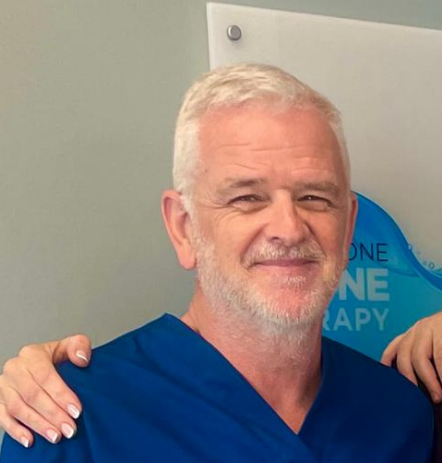
At Balance Health Centre, prolotherapy for patients from Manchester is carried out by Michael Furlong, our dedicated practitioner for this form of injection therapy.
Michael is a fully qualified osteopath and has completed advanced specialist training at the European School of Prolotherapy, where he gained a recognised qualification in this field.
His background in musculoskeletal care and regenerative techniques allows him to deliver prolotherapy with precision, care, and a clear understanding of how each structure responds to treatment and healing.

What Happens At The Appointment?
At your prolotherapy appointment, we begin with a relaxed discussion about your symptoms, medical history, and what you are hoping to achieve from treatment. This helps us understand how your pain or instability is affecting daily life in Manchester.
We then carry out a physical assessment to identify which ligaments, tendons, or joints may be contributing to your discomfort. During this stage, we explain how prolotherapy works and why it may or may not be suitable for your specific condition.
If you choose to proceed, a series of carefully targeted injections are administered using a mild irritant solution. These are placed directly into the affected soft tissues. Each step is explained as we go, and most people experience only brief, manageable discomfort.
Before you leave, you will receive clear aftercare guidance. This includes advice on activity levels, what to avoid in the first day or two, and what sensations are normal, such as mild soreness or warmth.
If further sessions are recommended, we will explain the suggested timing and outline a treatment plan based on how your body responds.
Appointments typically last between 30 and 45 minutes, and there is always time to ask questions or discuss any concerns.
Is Prolotherapy Right for Me?
Whether prolotherapy is likely to help depends on the nature of your symptoms and how your body responds to treatments aimed at repairing soft tissue rather than masking pain.
It is often considered by people dealing with long-standing ligament or tendon discomfort, joint instability, or recurring strains that return as activity levels increase.
If your symptoms ease temporarily with rest but never fully resolve, or if an area feels weak, unstable, or easily aggravated, prolotherapy may be worth exploring.
During your appointment, we assess your movement, medical history, and the structures involved. Prolotherapy is only recommended if it is considered likely to provide meaningful support for your recovery.
Book a Free Prolotherapy Consultation
If you would like to arrange a prolotherapy appointment, getting started is simple.
You can book a free 15-minute consultation to talk through your symptoms, explore whether prolotherapy may be suitable, and discuss the areas you would like assessed. If treatment is appropriate, we can then arrange a convenient time for your first session.
Patients from Manchester are also welcome to call us directly or send a quick message on WhatsApp.
Our team is happy to answer questions, offer guidance, and help you decide whether prolotherapy is the right approach for your needs.
Frequently Asked Questions (FAQs)
Below, you can find answers to questions about our prolotherapy clinic.
Is prolotherapy available in Manchester?
Yes. Prolotherapy is available to patients living in Manchester and the surrounding areas. Many people from Manchester choose to access prolotherapy privately as a non-surgical option for joint and soft-tissue problems.
How far is your prolotherapy clinic from Manchester city centre?
Our clinic is located on Birchfield Road in Widnes, which is approximately 25 to 30 miles from Manchester city centre. Travel time is usually around 35 to 50 minutes, depending on traffic and your starting point.
Is your prolotherapy clinic easy to reach from Manchester by car or train?
Yes. The clinic is straightforward to reach from Manchester. By car, the M62 provides a direct route. By train, Widnes is well connected, with regular services from Manchester stations, followed by a short local journey to the clinic. Many Manchester patients travel to us specifically for specialist prolotherapy treatment.
Do you treat patients from across Greater Manchester?
Yes. We regularly treat patients from across Greater Manchester who are looking for specialist injection therapy and regenerative treatment options, particularly where symptoms have not improved with conservative care.
Can prolotherapy help if physiotherapy has not worked?
Prolotherapy is often considered by people who have already tried physiotherapy, exercise programmes, or manual therapy without lasting improvement. It may be suitable where ligaments, tendons, or joints remain weak, unstable, or slow to heal. A full assessment is needed to determine whether it is appropriate for your condition.
How much does prolotherapy cost?
Prolotherapy costs £225 per session. This includes your consultation, assessment, and the injection treatment itself. Treatment plans are tailored to the individual rather than offered as a fixed course.
Do you treat patients from Salford, Stockport, and Trafford?
Yes. In addition to Manchester city centre, we regularly see prolotherapy patients from Salford, Stockport, Trafford, and other nearby areas, including Bolton, Bury, Oldham, Rochdale, Altrincham, Warrington, and St Helens.